Sunday, January 30, 2011

The "GADGETIZATION" phenomenon


ABOVE IMAGE FROM HERE.

Dec 2010 and Jan 2011 were hectic due to organizing activities and participation in three trade stall activities viz., ASICON 2010, Delhi; AICOG 2011, Hyderabad and PEDICON 2011, Jaipur. The three events were for surgeons, obstetricians and gynaecologists, and paediatricians respectively. The events were as usual, well organized, with ASICON and AICOG setting new benchmarks of organization. Pedicon was at a very artistically attractive venue. Doctors too were very enthusiastic and the indication is that doctors are getting very professional particularly because there is a lot of competition between doctors unlike in the 80s or 90s and earlier, where doctors enjoyed monopoly markets. Today, corporate hospitals too are competing to offer medical services.

During my journey back to Bangalore from Jaipur (post Pedicon 2011) I had an interesting conversation with Dr. Deepak, Paediatrician. This young and feisty doctor practices in a rural setting. He has a high achievement orientation and ever hungry for knowledge. What is interesting is his adaptability to usage of IT concepts and gadgets in his practice.

Conversationally he said that his talk at PEDICON, Jaipur was on use of smartphones and gadgets to become a SMART PAEDIATRICIAN! Imagine this talk is not from a person of a tech savvy city like Bangalore, but from a paediatrician of a rural place ie., Tarikere (Shimoga district). This place is a town in Shimoga dist. Dr. Deepak has a 120 bed hospital here and a well established practice.

His office practice is IT enabled. All patients have a no. and this helps access their EMR (Electronic Medical Record). In fact, he provides Rx to his patients only through e-mail and as printout from his computer printer. He has a smartphone and uses the same to be the SMART PAEDIATRICIAN that he espouses.


Dr. Deepak THE 'SMART PAEDIATRICIAN' (above) at his office (with his gadgets, including his smartphone below!)

Today, it is impossible to function without electronic gadgets. Unfortunately, we at pharma (barring the big pharma companies) are yet to lap use of gadgets with aplomb. Gadgets bring in transparency, maintain records of transactions, and increase efficiency and effectiveness significantly.

Gadgets can help deliver information of value instantly to strengt
hen marketing communication. Gadgets can help in branding with a hi-tech and hi-touch concept. Gadgets can boost MR performance during in-clinic and in-chemist activity. For eg., a palmtop can track goods available at a chemist store, distributor premises and instantly provide the information to the company server at another location. The most interesting gadget in modern day marketing is the Tablet PC - portable and packed with info it can be used as a communication tool.


Above is a pix of the tablet PC.

Many things in life have a ripple impact. There is no directly visible cause and effect phenomenon. For eg., a scientific product newsletter seems to be a simple activity. However, when it is distributed in the market among target doctors, there is a buzz created that enhances consumption of products. These gadgets too will have such an impact.

In the coming days, conformity pressure, sales pressures from gadget manufacturers, need for trendy marketing communication devices in the market and an environment with rich use of gadgets - all this will lead to increased "GADGETIZATION" in society. In fact, in PRACTICAL PEDIATRICS UPDATE 2011 organized by a leader paediatric website, ie., pediatriconcall.com a session is being devoted to smartphones and gadgets for pediatric practice.

To make gadgets a part of one's professional life, adaptability is required. Gadgets are becoming a necessity today.

Organizational culture tidbit

OCTAPACE principle:

O openness
C confrontation
T trust
A autonomy
P proaction
A authenticity
C collaboration
E experimentation

Thanks, get Gadget Savvy, scroll down to read all other blogposts, and click on older posts for reading other posts.

Sunday, January 16, 2011

Thinking cap marketing!


Today's competitive market conditions call for only for one form of marketing!

IT IS 'THINKING CAP MARKETING'!!


ABOVE ARE COUGH SYRUPS IN PET (TOP) BOTTLES AND GLASS BOTTLES (BOTTOM)


Tablets in aluminum strip foil


Tablets in blister strip packaging


Tablets in Alu-Alu packaging

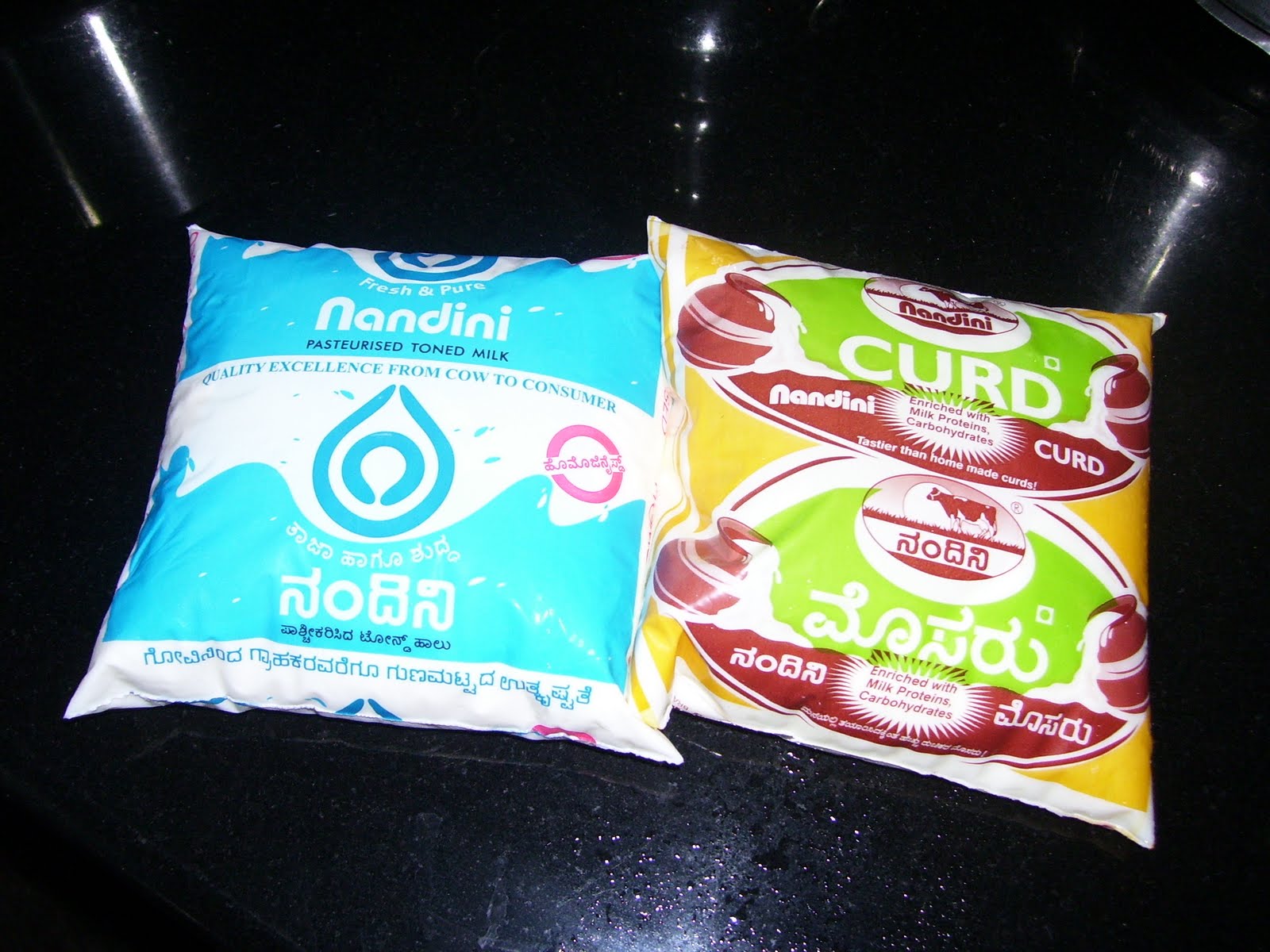
BELOW: EVOLUTION OF PACKAGING CONCEPTS OF MILK


Milk bottle


Milk in sachets


Milk in Tetra Pak packages

WHAT IS NEXT?

Marketing breakthroughs: this is what every company is on the hunt for! All companies are continuously working at creating marketing breakthroughs. The traditional pharma method is to invent new molecules: Atorvastatin and sildenafil citrate (Viagra) were such marketing breakthroughs for Pfizer. Marketing breakthroughs can come from various other concepts too. Even the unique shape of a tablet can create a breakthrough for a pharma marketer!

Marketing breakthroughs in pharmaceuticals can come from new generics with better therapeutic benefit or improved convenience (like Cifran OD ie., ciprofloxacin once daily)(a novel drug delivery system) or they can also come from improved convenient packagings. This can in fact 'reboot' the market for the product.

Milk (a nonpharmaceutical product) is an interesting example, which started off in cans. Then came the milk bottles for retailing milk, this was next replaced by plastic sachets ... and now Tetra Pak packages are making inroads in to the milk retailing market.

If a company can help invent or visualize the NEXT big thing ... then the company has a marketing breakthrough on its hands.

There are two ways of marketing: One is the ME-TOO approach. If a there is a successful brand of a generic, then avid pharma marketers launch me-too brands and take a share of the cake! In fact, in a protected market where the product patent was not applicable, and it was more of a seller's market, such an approach was OK, it made business sense and people made good money too!!

Now the market picture has changed with increased commoditization of pharmaceutical brands. Talking points are copy cat points, there are no real brand USPs (Unique Selling Prepositions) to differentiate pharma brands in a convincing way. Emotive differentiation too has limitations, prescribers are not easily won over today!!

So which way out?

The only way out is creating marketing breakthroughs in products. Something that truly differentiates the pharma brand from the clutter on the chemist shelves; products that can get a mindshare very easily from target prescribers.

Marketing breakthroughs need not mean new molecules, they can also represent new packagings or new ways of representing the product or new dosage formulations ... so on.

Thinking cap marketing

So what is required is a lot of thinking cap marketing across the organization to help create marketing breakthroughs!! Today only ' thinking cap marketing' works in the pharma industry!! AMEN!!

Thnks for reading this blogpost, please scroll down and click on older posts for reading all other posts!!

Sunday, January 2, 2011

My scientific poster at 62nd IPC, Manipal


Pharmacists in India are treated to an annual feast of pharmaceutical science, lectures, technology, and envisioning process, thanks to the concept of IPC (Indian Pharmaceutical Congress). This year, IPC was at Manipal, Karnataka.

IPC @ Manipal has warm memories for me. During the 42nd IPC, Manipal, I had not only won the second prize in the National Elocution Contest, I had also presented a paper on management. (In fact, I have represented Karnataka during my Final B Pharm, 1st Year M Pharma and 2nd Year M Pharma ie for 3 years, in the National Elocution Contest @ IPC and won the second prize twice!).

This year too, I was eager to do my 'bit' - remotely or in situ, since the IPC was at Manipal (in our own state of Karnataka, and that too at a place where I have very warm memories of IPC. Morever, our family roots are in Udupi district (Durga village, Karkala Taluk). So Manipal which is at Udupi dist., has an emotional bond with me too!!).

Accordingly, I registered as a delegate of the 62nd IPC, Manipal where I incidentally got the first registration no., and I submitted a scientific poster (seen atop). The poster was on BRAND FORTIFICATION STRATEGIES used in Pharmaceutical Marketing. The idea was to bring out the techniques used to strengthen brands in pharma marketing, since today, brands are very important assets (recollect that Piramal Healthcare sold 350 brands and just 1 manufacturing plant at Baddi for a whopping Rs. 17000 crores - to Abbott.).

Some philosophy

It is vital that pharma professionals participate wherever possible in such knowledge exchange events, either through attendance, presentations, posters, talks etc simply because knowledge exchange leads to furtherance of knowledge and strengthens the environment of pharmaceuticals.

The philosophy is that we are all fundamentally, 'children of the environment'. If the environment is rich in resources - systems - knowledge, fostering creativity, and providing impetus for individual achievements, then each person stands to benefit. Many ask, why is it that Indians succeed in America? Whereas in India, the Indian will be mediocre. The main reason is the environment - the opportunities and inputs that the American environment provides, creates successful Indians. Hence, it is in the best interests of all people that we endeavor to create an 'enabling environment'.

Since every drop counts to make an ocean, I put in my bit through registration as a delegate and a scientific poster.

The 62nd IPC @ Manipal, Karnataka was a stupendous success in terms of methodical glitch-free organization and excellent facilities. CONGRATS TO THE ORGANIZERS OF THE 62ND IPC,Manipal.

Research involves collection of data, analyzing the same (quantitatively like using statistical methods, and qualitatively), doing some experiments (testing hypothesis or seeing for repeatability). Research in fact, is not an 'ivory tower' type of activity. The practice of research methods is possible for one and all. Surely a research oriented work culture is about being scientific and inventive. Research is not something abstract. Research and development or innovation can be a part and parcel of every professional's life.

THE NEXT IPC IS AT BANGALORE!!

Sunday, December 5, 2010

Empowerment marketing

Above image from here.

One of the key factors for organizational successes is EMPOWERMENT. Essentially, this is a process where individuals or a community are invested with resources, decision making powers and a sense of authority. Obviously, this means making people feel responsible. Making people feel responsible for a deed or an area of operation, itself makes a difference to the person who is gaining the powers. Along with responsibility - accountability, sense of ownership and the feeling that he/she is answerable, tags along. Empowerment is a process that needs to administered with tact and training. Empowerment is surely responsible for many successes in organizations.

An interesting marketing concept is that of Tetra Pak. This is a Swedish MNC. Tetra Pak is a pioneer food processing and packaging company, they have pioneered paper or cardboard based aseptic technology packaging material too. Their approach to marketing is interesting.

Tetra Pak joins hands with companies, helps innovate and works with them to produce beverages and food products that use Tetra Pak based processing and packaging materials. More the sale of those products, more is the sale of the Tetra Pak based packaging. This way there is a symbiotic relationship between the product marketer and the packaging supplier (ie., Tetra Pak).

Tetra Pak does not manufacture or market the end products themselves at any time. They are solely bothered with sales and solutions based on their packaging materials. The result is that the packaging material helps the product manufacturer market better and make more money.

Verily, Tetra Pak is EMPOWERING the product manufacturer through his packaging systems. Tetra Pak empowers the product manufacturer with technology, expertise in processing and packaging, marketing support, new ideas, fresh knowledge, insights ... . This process of making the purchasers, of its food processing equipment and packaging materials, empowered has in turn made Tetra Pak very rich and successful too.

This is a fresh and successful facet of marketing that can be rightly called as EMPOWERMENT MARKETING.

In a similar vein, Mc Donald's and the franchisee based marketing business model owes its success to the process of empowerment embedded in marketing design. There are scores of entrepreneurs who have become multimillionaires by becoming franchisees of McDonald's.

Empowerment marketing actually provides resources and a platform for companies to tap the potential of individuals.

Imagine Mc Donald's without its franchisee or joint venture based marketing model. Certainly one can conclude that it would not have grown to its present stature if it were not for its business model based on systems, monitoring and consequent empowerment.

Empowerment is not blindly offering resources, and authority to the recipients. Empowerment is a scientific process of offering training, creating monitoring systems, constantly validating those systems, measuring, taking stock of the new challenges from the environment, and so on. Empowerment is a joint responsibility of the person(s) empowering and those getting empowered. It is a story of constant communication between the two parties, evolving win-win agreements and making the joint working 'work'.

Empowerment is about synergism: ie., 1 + 1 > 2.

Marketing is a process of empowerment: particularly, during 1950s, pharma marketers were a valuable lot to the doctors. Pharma marketers during those days (where print media was not very penetrative and electronic media were absent), brought important clinically relevant information, tools and other materials to doctors. In turn, due to the benefits, doctors would provide sales through their prescriptions. Since, the pharma marketing information and tools were offered only to doctors for prescription, it was called ethical marketing.

Today, the process of empowerment is not just through Medical Representatives. Brand touch points are available through various other media. And through all contacts prospects and customers are actually trying to get empowered through the value being delivered. Hence, marketing is a core process of empowerment.

It is a fact, I have ideated the concept of empowerment marketing and the term EMPOWERMENT MARKETING.

HOWEVER, THE WORLD OF INTERNET SHOWS THIS CONCEPT HAS BEEN THOUGHT OF BY OTHERS. Empowerment marketing is a term used by this blogger in a slightly different way.


Why does EMPOWERMENT MARKETING succeed?

Empowerment is a process that helps an individual or set of individuals go about with a SENSE OF PURPOSE. There is a sense of autonomy experienced by the empowered individual(s). This autonomy and sense of purpose when used in marketing helps the process of marketing succeed.

Bottomline: In essence, marketing should deliver value that empowers the target audience. This helps the marketing process succeed!

Thanks for going through this blogpost, please recommend this blog to your acquaintances and scroll down to read other blogposts.

Sunday, November 14, 2010

Marketing is win-win empowerment


ABOVE BEAUTIFUL IMAGE FROM HERE.

We live in a society with a distinct trend towards TRANSPARENCY. It is a media and information driven society. Technologies like latest mobile phones are breaking the information barrier. One can get information from the internet, media and acquaintances in a jiffy. Transparency is a result of this media explosion. Transparency is leading to an age of the EMPOWERED SOCIETY.

Concept of empowerment

Power is the ability to influence and control resources, events and behaviours. Power comes from one's competencies (ie., knowledge and skill sets) and position. When a person gains a particular position in a workplace, club, NGO, or Govt. system, the role comes with a package of associated powers. Thus, the position of the person creates an ability to influence and control resources, events and behaviours.

Empowerment is the process of investing a community or individual or set of individuals with power. This can come through mechanisms that strengthen or create new competencies or granting certain positions, when a person gains the position, he gains power. New Media (internet, mobile, social communities on the web, etc) and flow of information has created a gigantic infrastructure for empowerment in society.

This has changed social life and the game for marketers.

Marketing: which way ahead?

Marketing is a value delivery process, it stimulates consumption of goods, strengthens brand equity, and facilitates exchange processes (goods or services are exchanged for monies). When a person does not have access for information search (and thus, getting empowered in the buying decision process), the marketer has an obvious upper hand. The marketer can educate customers and influence the buying process more easily.

The situation of customers, patients and prescribers in the contemporary world is different. There is an enhanced network available for information flow. 25 years back, a GP had to book a trunk call to a city based consultant to get advice on treating tricky OPD medical cases. Today, when in doubt, the GP can give a call on the mobile and if patient is lucky, ie., if the specialist is free, the doctors will discuss the case on real time basis and institute appropriate therapy to improve the lot of the patient. In this tele-conversation, brand names get endorsed or recommended. Marketers can ill afford to ignore such mobile based or internet enabled conversations. Empowerment is not only through the pharma marketing process, there are other connecting media with prospects and customers (target doctors and doctors).

Marketing as an empowering process

In a recent conversation with an ad film maker, he asked me a basic question: Why do doctors meet MRs?

The obvious reasons are as follows:

a) MR gives positive strokes, appreciates, gives a 'face to the medicine brand', builds confidence through conversations and detailing on the brand; creates emotional bonding with promoted brand/company
b) MR positions himself (unconsciously or consciously) as a person who is there in the clinic to help the doctor provide a better service to the patient
c) MR provides freebies (samples, small compliments that help in clinical practice, books, reading material, compliment gifts that are a great help at home, sponsorships to conferences, vacation trips and so on)
d) Talking to MRs helps the doctor jog his memory. MRs act as sparks who rekindle memories of medical knowledge, this is a great help to doctors

The above list may not be exhaustive but covers most of the points.

In essence, we notice that marketing activities conducted by pharma companies through MRs or through other media are basically empowering.

The pharmaceutical company's marketing activities, enhance the power of a doctor. By promoting products, giving literatures, and knowledge material, there is a contribution to the doctor's expertise power. Freebies enhance the material power and resources of a doctor. In essence, empowerment is the final objective of pharma marketers (or other marketers).

When a customer shells out monies to purchase a product or service, on the emotional side it is for satisfaction, and on the other side, the act of purchasing, enhances power of a customer or empowers the customer.

Conclusion: The tact for marketing success is win-win empowerment!

The marketer should empower his customer through marketing or value delivery activities, and the customer should feel empowered (not weakened or exploited). This is a great lesson of marketing. When the marketing rhythm is lost, when the customer does not feel empowered, but gets a weakening feeling of exploitation, customer is displeased.

When the marketer feels that the customer has exploited the marketer and bargained too much, then again the marketing game is not win-win and there is a sense of loss in the mind of the pharma marketer.

The point is pharma marketing game is about empowerment. Both marketers and prescribers or chemist retailers are in the game of becoming powerful in each transaction. When there is win-win empowerment, there is a successful transaction.

When a MR has to provide extra sample adjustment, site facility (or extra days to retire payment) to stockist or institutional purchaser, the marketing game is a distress game, not a win-win empowerment game. When a MR feels a sense of loss, he will surely avoid gaining similar experience in the future.

This process of win-win empowerment is not just at the stockist or distributor level, it is at the doctor level too. When a MR simply does not provide any material inputs, only details and asks for prescriptions for a product, the process can go on only for some time. After sometime, the doctor will surely feel that the MR transaction is not empowering him (the doctor). That is when the doctor will lose interest in the pharma marketer. Thus, maintaining win-win empowerment relationship is the key to successful marketing.

Empowering is a process that should make both parties in the transaction feel empowered (get the feeling that they have strengthened).

Training, an empowering process

In this vein, training too is an empowering process. When training is viewed by trainees, as a process by which they are gaining strength, confidence, and power, the training modules and program will gain appreciation.

On the other hand, if trainers work to expose the weakness and ignorance of trainees, create an atmosphere where trainee feels he is facing weakening situations, the training will surely fall flat and fail to achieve its objectives.

Marketing tools are meant to empower, not distract or cause burden

Pharma marketers work hard to provide tools for selling, marketing and brand building activities. Visual aids, CDs, literatures, reminder cards, gifts, samples in special sample cache (or catch) covers and various other product promotional materials are given for the "magic bag" of the MR. If the MR feels that these inputs are mere distractions or burdensome materials, the marketing tools will fail to deliver their objective. Ideally, marketing tools should provide a sense of purposeful direction to the user, and help the MR in his in-clinic, in-stall, in-chemist and in-stockist activities.

If the front-line sales personnel or doctors themselves do not get any value from the marketing tools, they become burdensome marketing inputs. The central idea is that the value delivery marketing tools or inputs should in the final analysis create a feeling of empowerment in MRs, the front-line sales personnel, and customers (doctors, chemists, patients and stockists or distributors).

Marketing is surely becoming a process of empowerment, a process of establishing win-win empowerment through transactions. It is not just about value delivery, or facilitating exchange processes. Marketing should empower, customers and marketers alike, with mutuality.

Why are Americans very successful marketers?

If we look at contemporary or modern business history, we see Americans as the most successful marketers. They really know how to sell! Americans are constantly inventive and creating interesting products and services to sell more and market more. But why are Americans successful?

As such, with every product or service that these Americans sell, they are not there to merely satisfy the customers. In fact, their information based labeling and packaging techniques, their product communication and advertisements are all meant to make the prospect or customer feel empowered through the product/service (the customer should feel that he or she is gaining something that is going to make a powerful difference in his life and will empower him).

This is what the master marketer PRESIDENT BARACK OBAMA, did when he came to India. He said Jai Hind in the Indian parliament. President Obama talked all right things: Gandhi, Swami Vivekananda ... he said the right things at Hotel Taj Mahal, Mumbai ... Obama talked about India as a super global power ... basically he, as a master marketer, made Indians feel very special ... very powerful. Obama talked about India becoming a part of UN Security Council. What a master marketing stroke!! Obama did all this to create jobs in America, to help American marketers get better access to the Indian market ... Obama did all this as a patriotic American, a loyal marketer of Americanism. Truly, the India visit of Obama was a testimony to the fact that marketing is a win-win empowerment process.

ABOVE IMAGE FROM HERE.

Hope this blogpost has created a satisfied feeling of empowerment in you, for more food-for-thought nuggets, kindly scroll down, read all other blogposts, click on older posts as and when required, feel free to empower your acquaintances by recommending my blog. Thnks in advance.

Friday, October 29, 2010

Growth addiction


Above graph from here.

Growth will continue to be a desirable and indeed a necessary business objective.
- Peter Drucker

Peter Drucker, described as the Aristotle of management science, has elucidated a lot on growth. He has reiterated that able and competent management results in growth. Hence, the innate emphasis in all pharma (and nonpharma) companies on growth.

Driven by competence, the Indian pharma industry is growing!

As per MAT June 2010 IMS figures, the pharma industry is showing 20% growth (MAT value of Rs. 43823 crores). Established brands are registering good growth. Vaccine market is zooming. Antidiabetic drug market is the leading growth market segment. The June 2007 MAT value was Rs. 28841 crores and in June 2010 the MAT value of the pharmaceutical (retail) market is Rs. 43823 crores!

Managing growth is a challenge to businesses

Growth is a great motivator for employees and owners! A growing business offers hope of a better and improved future. Stagnation is killing and creates cesspools. Hence, companies and people do (or should) plan for growth and work for growth.

Growth in pharma does not come only by covering more doctors, increasing doctor call frequency, pumping in more samples, gifts and sponsorships ... there are other points that are a necessity in managing growth:

a) Process development
b) Knowledge management
c) People practices
d) DEVELOPMENT OF A VALUE FRAMEWORK AND ACTUALIZATION OF THE SAME

To understand how indisciplined growth can lead to disastrous results to society, Govt., owners, employees, and to the business as a whole ... look at SATYAM COMPUTERS! OR look at the iron ore mining industry of Bellary district (Karnataka). In both these cases, growth lacked a value framework for the organization and industry, respectively. Growth has come with a whole load of problems. There was also no value actualization at Satyam or in the mining industry.

This is why Infosys emphasizes POWERED BY INTELLECT, DRIVEN BY VALUES. At Wipro too, the six values are given a lot of emphasis. MindTree too has a value framework and emotional infrastructure in place to carry on growth.

Growth without a value framework, company culture, people practices, process development and KM (knowledge management) will lead to corruption or breakdown and other problems. Very often growth is associated only with money management, improved marketing penetration and throughput, inventory management, and physical infrastructure (like production facilities, technology etc). However, such a growth has its susceptibilities or weaknesses and can lead to several problems. Managing growth means a lot more.

Knowledge management (KM) refers to strategies and practices of organizations to access, create, identify, document and share insights and experiences. It is a very sophisticated, subtle and powerful science. The ability of KM to produce change and match employee thinking to the market thinking is very potent.

The time is ripe now in Indian pharma industry to take a leaf out from Indian IT industry to learn about managing growth comprehensively, even as IT, is today, celebrating BangaloreIT.biz. Thnks for reading this blogpost, and we warmly WELCOME PRESIDENT OBAMA AND FAMILY TO INDIA, a bit in advance!! Please scroll down and read all other posts, click on older posts, do kindly recommend this blog to your acquaintances.

Sunday, October 17, 2010

Crisis management: USP of Indians

SPECTACULAR! This year's Commonwealth Games, Delhi 2010 were truly spectacular and very satisfying to athletes and viewers. This year's games' were mired in controversy. One wondered whether they would take off, at all!! Anyway, all's well that ends well!!

So what is the take home message from the 19th Commonwealth Games, New Delhi, 2010? The message is that we INDIANS ARE PAST MASTERS AND (PRESENT AND FUTURE) MASTERS OF crisis management!!

When things look hopeless, you will find that Indians have an inborn quality of doing necessary jugaad or street smart innovativeness and salvage the situation. Jugaad includes frugal engineering but not necessarily strictly so. When Citibank was in a deep mess and required a messiah to salvage the situation, it was Vikram Pandit who took the bull by the horns!

India is in a permanent state of chaos. First time visitors to India are stunned by the dust, heat and general muddle. In fact, they wonder how India ticks, being in a permanent state of chaos!!?! For us, Indians, management of challenging chaotic situations, is, of course, all in a day's work!! We Indians are deeply tolerant, hence, we can take in all the chaos very equanimously!

Incredible India! Incredible health situation of India

We call this chaotic situation as unity in diversity! This diverse and chaotic environment gives us a special quality to do jugaad and try and come out of the tight situation.

Consider the mess that the disease situation of India is:

a) India has the largest TB cases in the world (23% of world's TB patients)
b) 86% of the world's diphtheria patients are in India
c) 54% of the world's leprosy patients
are here in India
d) 55% of the world's malaria patients are in India

India is the well known 'capital of diabetes of the world'!

Polio (42% of world's patients are in India), tetanus and pertusis are also prevalent significantly in India. This is as per World Health Statistics 2010 released by WHO.

But this deplorable health situation seems almost implausible after seeing the fantastic opening and closing ceremonies of Commonwealth Games, 2010 at New Delhi! But the above health situation is true and represents a great continuing opportunity for pharma marketers to try and improve the health situation.

Managing crises is a second nature for us. We are sure we will be kaamyaab in bringing a turnaround in the health situation of India. For that firstly, we have to agree that there is a crisis. That is difficult for us Indians!! However, until we agree there is a crisis we will not act! Once we know that a crisis is on us, we will put the act together, that is how we Indians behave! Otherwise ... chalta hai!!

Today the fact is that India is booming. Economic liberalization has created an economic resurgence. Yet, it was not a proactive liberalization policy that was brought in! We were shamed, way back in 1991, when IMF (Indian Monetary Fund) bailed out a bankrupt India. This forced the Govt. of India to liberalize and galvanize the Indian economy. This caused growth of Indian economy.

We should hit a crisis - only then do we wake up! That is why we Indians are great at crisis management - the evidence is the Commonwealth Games, 2010!!

Crisis means an unpredictable event has occurred and it needs to be managed. Today, we are sitting on a major silent health crisis. Private entities and Govt. bodies need to take on the challenge facing India before it becomes recognized as a crisis issue. It is a silent crisis today, but when international organizations start coming in to India, in a major way to save the health situation of India, we will only be collaborators with these entities. Global healthcare NGOs are seeing a big opportunity in India. Will we Indians require international attention and guidance to improve our healthcare situation or can we do it ourselves?

Thanks for reading this blogpost, please scroll down and read all other blogposts, click on older posts as and when required. Please feel free to recommend this blog to your friends.