Sunday, April 18, 2010

The art of praise


The legendary founders of Google (Larry and Brin) bask under praise, at a meeting in 2006.

It was a warm Sunday morning, some time back, at Mysore. I was having coffee (at a small cafe) with my good friend Mr. Vivek Balse, a senior front line field personnel with Pfizer. Suddenly, he excused himself, got up and went across to a bespectacled gentleman standing alongside a new bright red Maruti Swift car; Vivek spent some time talking to him.

After some time Vivek came back smiling to me. Vivek said to me that he was talking to one of the leading OBG specialists in Mysore, apparently a lot of conversation was about the new car the doctor had acquired. Mr. Vivek said that he did praise him a lot for having purchased the new car. The doctor was very happy receiving this praise. Mr. Vivek added, that genuine praise was a powerful sales tool, and he was confident that this impromptu call at the restaurant would continue to generate prescription results. Such was the power of authentic praise, he added.

Praise is an expression of admiration and commendation. We tend to use the same very sparsely in day-to-day life! Hey! Just come to think of it, if you are married for 10 years and above, just try and recollect when was it that you praised your wife?!! After a certain no. of years of marriage I think praise gets a little scarce! And this happens in professional life too when employers and employees have spent some time! Everything is sort of taken for granted, praise becomes dearer!! It happens while transacting with customers too!! It becomes very mechanical and mundane. Praise is sacrificed on the alter of boredom!!

Praise is a basic human need

Praise is a very basic human need and it has very important antistress qualities. Praise lightens the atmosphere, and refreshes human relationships. Praise helps people generate matching wavelengths. Praise creates enthusiasm. Praise makes people smile. Praise makes people have win-win relationships. Praise inspires people to work for the avowed objectives.

Praise is not a function of "child ego state". Need for praise or the need to praise is not a sign of weakness in human relationships. Praise is an important 'fertilizer' of human activity.

Praise need not indicate approval or sympathy seeking behavior. Praise, simply, is a positive stroke that waters relationships.

THE KINGS LOVED PRAISE

IN INDIA, KINGS AND MINISTERS HAD UNDERSTOOD THE IMPORTANCE OF PRAISE IN COURTLY AFFAIRS.

KINGS APPOINTED WITTY, HIGHLY PAID, SKILLED ORATORS AND SPECIAL PERSONNEL IN THE COURT CALLED
"HOGAL BHATTAS" (PEOPLE WHO PRAISE).

SUCH WAS THE IMPORTANCE GIVEN TO PRAISE THAT KINGS ENSURED PRAISES WOULD COME WITH FULL FLOW, EVEN POETICALLY, THROUGH THESE SPECIAL APPOINTEES: "HOGAL BHATTAS"

THERE WAS A SIMPLE RATIONALE:
PRAISE WOULD LIGHTEN THE BURDEN OF TENSE MOMENTS IN COURTLY AFFAIRS, AND WILL INSPIRE INVOLVEMENT, IMPROVE SELF-WORTH, LATERAL THINKING, IMPROVE OUTPUT, AND THEREBY THE KING'S SUBJECTS WOULD BE BENEFITED.

Do not take the praise concept lightly!!

All working people - independent professionals and employees, and even employers or the senior management - are all human. All work to achieve some goals in personal life and professional life. During inter-personnel transactions, besides achieving certain goals, innately everyone is looking for positive strokes. Praise is an important positive stroke. Praise is a key positive reinforcer that can be used to as an influencer to generate desirable behaviours in customers and employees.

Praise is seen with suspicion

Praise as a concept is often seen with suspicion. People who praise, are looked at skeptically: is this guy praising because he wants something? Is it sycophancy?? Is the person praising, taking me for a ride?! Is he doing it to get something out of me?! This particularly happens in companies where the powerful sometimes get praised by their minions!! The powerful then tend to take the praise with a pinch of salt!!

When a guy (may be the boss or colleague) praises a gal, the lady will blush (atleast inside, if she sort of trusts the guy) or it will set the alarm bells going in her mind!! Hey, I better watch out - she will think!!

When a subordinate suddenly comes under praise by his rather khadoos (angry and stingy) boss, the subordinate will start suspecting the praise!! So the moral is - to praise, first ensure there is mutuality and trust in the relationship. It may be with a powerful executive, a subordinate, a customer, or your wife ... but ensure that praise is on the platform of trust!

When a doctor or chemist suddenly gets praised by a MR, he will become defensive.

Praise with a sense of balance

Praise needs to be used like salt - a bit more will make the food inedible, a bit less will make food bland. Praise needs to be used with a bit of 'culinary skill'!

Many ways of praising!!

Praise can be communicated in many ways!

I remember when I had just joined Themis, some time in early 1990s, we were training at a hotel at Chennai. I was a trainee then. There were a few cute girls staying in nearby rooms on the same floor and they too had come for training from Bombay for some other company.

The guys wanted to somehow give 'positive strokes' to these girls!! The next day morning, a nice poster, made overnight, praising them was passed to them along with the morning newspaper!! Wow!! You should have seen the effect it had on them - their dressing, vocal tones, "bhav" ie., the way they threw their weight around and generally behaving hard-to-get was seen to be believed!! It was fun!! Anyway, pity, they left for Mumbai on the same day, and that is where the incident closed!! But the moral of the incident for me was - just a few words of praise written on a poster had such a dramatic effect on the atmospherics!! Praise is indeed a powerful tool of selling!!

Some effective keys to communicate praise:
  1. Vocal tones are critical when praising. Do not feel very shy when praising, it may be a lady or your boss or subordinate, the tone of the voice should sound genuine. Do not praise in a flippant way. A dash of seriousness to the praise will make the communication very effective
  2. Praise should be timely. Do not praise the doctor for his scholastic achievements on the very first call. First establish some credibility and trust, then praise if situation or conversation warrants
  3. Praise should be made in the correct situation. When praising there are certain delicate points to be noted. If it is a lady doctor, praise should be used with great caution. I have witnessed a transaction where a young MR praised a lady doctor with full fascination for her personality, he did this probably on the first or second call in front of a patient who happened to be there, the lady doctor was not amused, she roundly ticked him off!! Later I learnt that the first-line manager had to rush to do some damage control, of course, being a lady, she was understanding and she pardoned the young MR!!
  4. Language of praise should be in line with the age and stature of the person too. If it is a very senior doctor with a load of degrees, even genuine praise by a young MR will not have any effect, it will drop off like water from lotus flowers!!
  5. Praise can be communicated through a third party manner. Let us say, a group of MRs appreciate a young product executive's speech. And if this message goes to the product executive's boss, if the boss communicates this message to the young product executive it will have a fantastic impact on the product executive's self esteem and working!
  6. Praise can be communicated through sms, e-mail, letters, and phone too, to make it timely and ensure good impact
  7. Be creative while praising! Use nice innovative words, be novel in conveying praise (for eg., the poster idea and delivering it along with the morning newspaper was very novel and interesting!!)
  8. Be issue based while praising: don't praise generally, let it be a specific praise
  9. Praise is an important religious trait. Particularly, in Christianity praising the Lord and worship has a lot of emphasis. Praise is a divine gift to humanity. So praise can be used in worldly affairs too for telling effect. If you click here you will read how praise can produce good results in life management. Praise has powerful influence in strengthening sense of self-worth, this in turns creates desirable behavioural outcomes. Generating high performance from companies, employees, and customers will require good praise as a tool!
Praise can be used better in daily management. This concept is highlighted here (please click). Praise is a powerful change agent!! Read about it here!! Mr. John Mack's words of praise still have an inspiring effect on me, not to say the least, one inevitably reserves the best of praise to Mr. Mack, Mr. Truelove, Mrs. Amy, and Mr. Rich Meyer , and many others like Dr. Charakan, Mr. Harish, and Mr. Kallianpur for their untiring work on the net!!

Thnks!! I genuinely praise you for reading this blog!! Please scroll down, read other blogposts, click on older posts whenever required, pls recommend this blog to your acquaintances. Let each husband praise his children, wife, and other people!!

Sunday, April 11, 2010

Training, strategy and activities

The recent tragedy in which, 76 brave CRPF jawans died due to an attack by naxalites has a lesson for us in India. Gen V K Singh, our army chief, reflecting on the above incident said that the ill fated 62nd battalion of CRPF was not trained for jungle warfare. Hence, when this battalion went on a patrol influenced by an 'intelligence plant' they were sitting ducks to the bullets by maoists. This incident is a chilling reminder to people involved in military or armed forces or MARKETING (yes, marketing) that training, strategy and activities are very vital.


The above image obtained from here.

Training is an important process that equips people in military operations to handle 'objections' to their presence. Obviously, these 'objections' come from individuals hostile to the armed forces involved in military operations. In marketing too, there are many objections that sales personnel and marketing people handle. In fact, marketing is ultimately about overcoming objections and converting prospects to customers. Training helps boost confidence, communication skills, vocalization, body language, and detailing to ensure doctor and chemist conversion by pharma marketers. Training is not about teaching in classroom settings alone. Training is an ongoing process. Training in the military or in marketing arenas is vital.

Let us try and understand what military trainers do and how it may be adapted by pharma trainers!!

Improve capabilitities

The basic motto of military training is to establish and improve capabilities of military personnel in their respective roles. So training programs ensure that there is an acquisition of skills, knowledge and competencies that enhance role performance. A MR becomes better in his role as a front-line pharma marketer converting doctors to patronize his products. A first-line manager correspondingly becomes better. So the capability has to be improved.

To improve capability, outcomes should be clearly defined. A simple routine may be, taking out the visual aid smoothly while maintaining eye contact with doctor during in-clinic activity, handling the visual aid, and using pointer to ensure effective detailing. Many MRs do not do this properly. So the pharma trainer's goal can be ensuring correct visual aid handling and this itself will enhance in-clinic capability of MR.

Recruit training

New jawans are put through training modules that toughen up recruits physically, psychologically, and technically. MRs too have it tough on the field finally, they have to go yonder to unknown areas, where terrain is unknown, most companies (except professional companies that have a robust database) do not provide new recruit MRs with doctor list. So the MR has to seek doctors, chemists, understand the sampling strategy or tactics, clinic entry tactics, chemist POB tactics, and so on. If MRs are given role training through appropriate actionable intelligence (market data), mock exercises and drills it will do wonders for the company. So MRs ought to finally get toughened up physically, psychologically and technically.

In most companies, the first-line manager handles the initial training. But recruit training is a key to building a solid MR, since he is very mouldable at the initial stage.

Advanced training

After the basic training, jawans may get slotted for specialized training for eg., handling explosives etc or higher levels of skills. However, the basic training is the versatile one. Although MRs do not have such specialized roles to play, still training on new products, new concepts in marketing like campaign activities, in-stall activities etc will help the organization reach new heights.

Resocialization

This is a type of enculturation. Jawans are made to orient towards the nuances of a military culture. Jawans have to re-culture in to a military culture. Mannerisms, presentation etc change. This resocialization is a very important process to ensure highest motivation and dutifulness. Resocialization creates a personality change, a jawan is born!!

Resocialization does happen in pharma marketing - over the years the boy MR becomes a professional MR, his communication attributes sharpen up, presentation improves, crisis management skills become wonderful, customer handling is excellent ... however, there are no focused training modules in pharma marketing that help in resocialization. It is time the pharma biggie companies who can afford to do this, start emphasizing on the same. Resocialization will help the civilian new recruit MR become a sharp professional MR very quickly. Resocialization will show up in the way the MR talks, walks, dresses, communicates, has social skills, the way he uses words to telling effect, the way he gestures, eats ... and so on.

Hand-to-hand combat

Military training also focuses on hand-to-hand combat skills. For marketers, the equivalent is the skill of handling doctors, chemists and stockists. Most MRs bumble and learn it on field or seeing how other company MRs particularly senior MRs do it. Or they observe managers and learn the face-to-face skill. But MRs could do with more of drill sessions to master hand-to-hand 'combat' techniques.

First learn to march!!

Roman soldiers were taught the first basic thing - LEARN TO MARCH!! Don't sit at home, pick the bag and go to the market, meet doctors, chemists, and stockists - LEARN TO MARCH!! This is perhaps the greatest of the training attribute that needs to be strengthened in MRs.

Take orders!!

After learning to march, soldiers are also taught to TAKE ORDERS! Not disobey orders. Marketing success can improve with the training to take orders!

Weapons and equipment training

March, take orders and be masters at handling weapons/equipment! This was the focus of training in the Roman army!! For pharma marketers, handling of weaponry/equipment - samples, leave behind sheets or literatures, gifts, visual aid, CDs, the MR bag, and other promotional inputs is the key to effective communication and doctor or chemist conversion.

After training comes MILITARY STRATEGY

Strategy means the direction of efforts and resources. In the military there are many strategies like blitzkrieg, ambush, charge, counter attack, human wave attack etc. Sun Tzu is said to be the most successful of military strategists, and he had elaborated 13 principles of warfare in THE ART OF WAR. The US army talks of a nine point broad strategy objective, offensive, mass, economy of force, maneuver, unity of command, security, surprise and simplicity. So strategy ie., the way we work and use our resources, is very vital to produce justifiable marketing outcomes.

With marketing complexities increasing due to customer empowerment, higher literacy, internet & media, the informed customer, liberalization, privatization, and globalization, it is imperative pharma marketers go back to strengthening training, strategy and then activities, to get the best bang for the marketing buck!

Surely, this article has made you think a thing or two, do scroll down, click on older posts, read all other posts, and pls recommend my blog to your colleagues.

Sunday, April 4, 2010

Market realities


Above image from here!

The raison d'etre of a pharma enterprise is the market. The market comprising of the set of prospects and customers (prescribers, patients, patient attenders and payers) - are the market elements that support product performance. Analysing the market of a product is a continuous process. Analyzing the market requires gathering qualititative and quantitative data. Trends need to be discerned. Many a times marketing myopia results due to lack of analysis and true understanding of the nature of the product(s)'s market. It is very necessary to go by facts, figures, and trends in the marketplace rather than by past knowledge (which may have become outdated), past experience (which may not be relevant), assumptions and hunches. For a pharma enterprise to be relevant and purposeful, understanding the market's composition, basics, behavior, trends, changes, moods, regulations, communication flow patterns, opinion builders, distribution patterns & changes, price points, product technologies, competitor activities, research activity trends, demographics etc are very essential.

Piramal Healthcare buys i-pill from Cipla

The recent market development of the purchase of brand property i-pill from Cipla by Piramal Healthcare in an all cash deal for Rs. 95 crores, speaks volumes of corporate vision and market analysis by these two market entities. The justifications are solid for both seller and buyer. As per Cipla's vision, brand i-pill is not a strategic fit as Cipla sees itself as a pure Rx market operator. Piramal Healthcare on the other hand, it is obvious from its market moves, wants to straddle the total Indian pharma and healthcare market. Piramal Healthcare is interested in both the Rx market segment and in OTC play, as it has brands like Saridon, Lacto Calamine ... . Mankind is the other paradigm competitor of Piramal Healthcare as this company is also in to Rx segment and OTC segments. Cipla is narrowing as a niche Rx market operator. Both Mankind and Piramal appear to be market savvy and are going as per the market trends of an increase in potential for OTC (over-the-counter) and OTX (prescription plus over-the-counter) products. However, Cipla believes its core competence is in Rx play and intends to concentrate on it.

So what is right? Is it OK to be judgmental? Should not Cipla with it's vast distribution reach, cash resources, and other market strengths worked to address the pharma and healthcare OTC opportunity? Is it Cipla's market myopia to overlook the pharma and market OTC opportunity (mind you for Ranbaxy, Revital (an OTX brand) is one of its most valuable brands?) What would have happened if Cipla had looked to building an OTC and OTX brand portfolio? Furthermore, Cipla does not have any great drug discovery research program. Would it have improved Cipla's shareholder value in the medium to long run if Cipla had ventured in to building a robust pharma and healthcare OTC and OTX brand portfolio? Was Cipla hasty in selling off its i-pill? These are valid and interesting questions.

I-pill is picked up at the right time from Piramal's angle. i-pill is operating in a part of the target market (ie., penetrated market as per above graphic). There is still the available market portion and the potential market that is bigger and to tap this, Piramal Healthcare's experience as an OTC operator will help.

However, Cipla had i-pill on a platter to woo the OTC 'market lady', and make inroads in to this market too. However, Cipla chose to be coy, and has pulled out. Cipla has given away i-pill to a more virile, aggressive suitor of the OTC pharma market - Piramal Healthcare.

There is no doubt companies like Piramal Healthcare and Mankind have understood the potential of OTC and OTX markets. Whether Ranbaxy has the same verve to go ahead with its OTX and OTC pharma market operations after its purchase by Daiichi Sankyo is to be seen. Mind you, Ranbaxy has a great operational record in the OTC and OTX market operations. It was Ranbaxy in the past that has understood the realities of Indian pharma market and unveiled its Rainbow Coalition Business Model. This model or business plan has time and again proved its robustness, Revital is a vital product in Ranbaxy's business portfolio. If Ranbaxy does a volte face and decides to concentrate only on its pure Rx play biz, it stands to lose a lot.

Philosophy is fine, but the market realities are more vital! Market has to be analyzed in terms of PENETRATED MARKET, TARGET MARKET, QUALIFIED AVAILABLE MARKET, AVAILABLE MARKET, AND POTENTIAL MARKET, as per above graphic. Having analyzed market realities, decisions are always welcome. Business prudence is following the market structure of a product and adapting to this market reality rather than being philosophical.

Charles Darwin had once said: IT IS NOT THE STRONGEST OF THE SPECIES THAT SURVIVES, NOR THE MOST INTELLIGENT OF THE SPECIES THAT SURVIVES. IT IS THE ONE THAT IS THE MOST ADAPTABLE TO CHANGE (THAT SURVIVES).

This is an important lesson for market operators, enterprises should learn to adapt to market realities. Has Cipla denied itself an opportunity to adapt itself to market reality? Or is it the old fashioned "stick to your knitting" kind of a thing, OK for Cipla?

So the first market reality is that MARKET CONTOURS ARE ACHANGING, enterprises need to understand this, and adapt.

Pharma market (comprising of Rx, OTC and OTX) is a push market

Let us say, I have a lot of money, and I set up a cement manufacturing plant. There is not much market push to be done in in the domestic cement market as compared to say, launching a new drug or a new brand. Cement is a well known building material commodity, there is constantly increasing market demand, there is a current shortage of cement production capacity in India compared to cement demand, and further, I do not have to educate anyone about the virtues of cement or the side effects (and limitations) of cement as a building material. Everything is known about cement. I need to indulge in brand marketing and distribution to make the cement manufacturing business profitable.

This is not the case with the pharma market! It is tougher to operate in the pharma market. We need to push hard to make the brand or new generic a success. There is the aspect of producing convincing clinical documentation, and indulging doctors. That is market reality no. 2!

Technology is very vital to differentiate

The market reality no. 3 is that the pharma Rx market operates at two levels. One is the PRODUCT level and the other is the PROMOTION level. If you have a high tech product like a unique biological (say a rDNA tech product), or an aseptic technology electrolyte energy drink product, or any other tech product that cannot be duplicated easily, then technology helps you gain a juicy market piece.

If one has a me-too product without much of technology differentiation like the regular capsule, liquid oral or other such easily available technologies, then the emphasis will be on PRODUCT PROMOTION, and it is a rat race!

Hence, product technology differentiation makes a great difference to marketability of a product (promotion is very vital here too, for sustained adoption of the product by the market), however, the market piece is juicier! So market reality no. 3 is that product technology makes a difference!

Hope you enjoyed, reading the above three market realities (this list is certainly not complete), please scroll down, do read other blogposts, click on older posts as and when required, pass the word around about this blog url! Thnks!!!

Saturday, March 27, 2010

Vision and success

Success

A universal theme of life that transcends age, gender and hierarchy is the need to experience success. From the owner of an enterprise, the directors, managers, clerks, and workers; ladies, gents, children and every human has a destination in mind that he or she defines as success. The picture one has of experiencing the successful event actuates the individual to be active. The driving force behind a person's efforts is the need to experience success.

Vision

A related word is vision - this word refers to the end point that a person or organization intends to achieve. A clear and proper vision helps provide a direction to one's efforts.

A vision is not a day-dream! The vision is rooted in reality and based on knowledge. If a "vision" stems from assumptions - is not based on facts and figures, then the vision becomes inaccurate.

So the point is that the vision has to be workable not hypothetical.

Visions from visionaries

In contemporary India there are many visionaries who have elucidated their vision in the form of books. It is very evident that their visions are products of deep knowledge, wisdom, imagination and analysis.

A) Dr. Abdul Kalam Azad: our Ex President of India is a deep thinker on matters related to development of India. His vision is that by 2020, India can become a developed country. A book dedicated to this concept is India 2020: A Vision for the New Millennium. There is also a website dedicated to this vision (click here).

B) Nandan Nilekani: he is a remarkable business leader who gave up his job as the CEO and MD of Infosys to join the Union Govt. of India, as the Chairman of the Unique Identification Authority of India (UIDAI). His very famous book is Imagining India: The Idea of a Renewed Nation.

Both these books relate to the words vision and success. The above highly successful and accomplished individuals have compressed their wisdom, knowledge, imagination and analysis to produce their books that verily are vision documents.

The surmise is that knowledge in its various forms like practical knowledge (wisdom) and theoretical knowledge when combined with imagination produce a vision. This is shown in the graphic at the start of the blogpost.

VISION PRODUCES ACTIVITIES
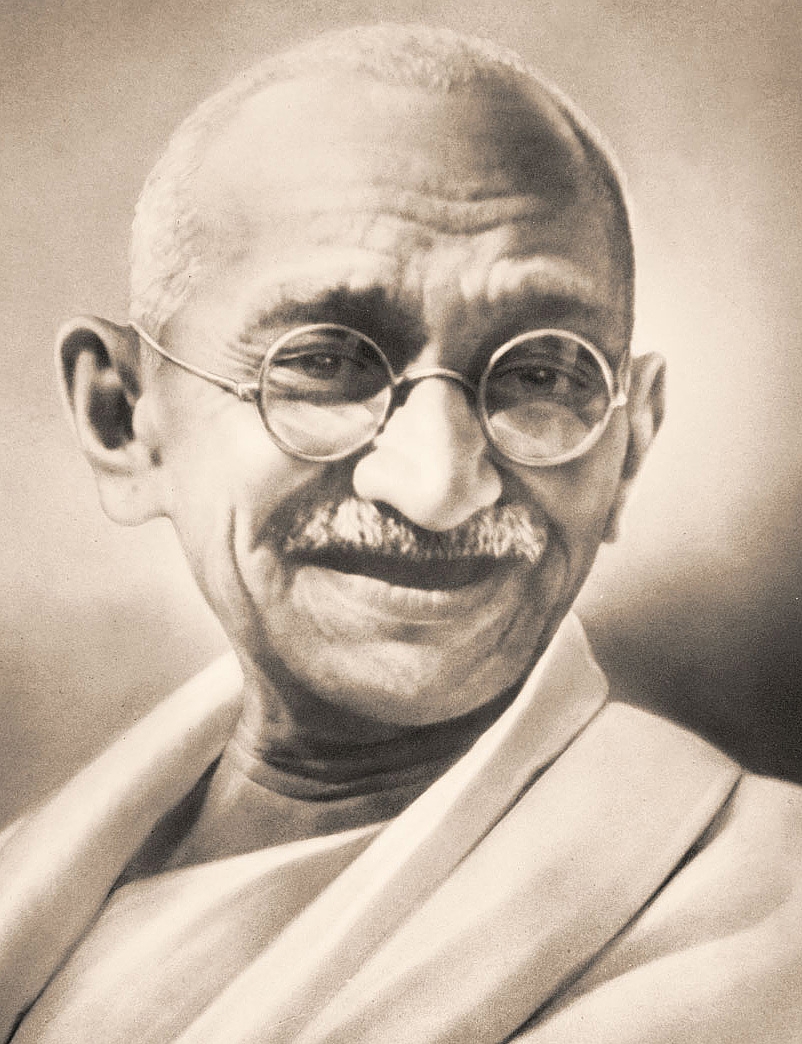
Mahatma Gandhi: a visionary and the Father of the Indian nation

When an empowering vision actuates an individual, he starts following up with activities. The Indian revolutionaries like Mahatma Gandhi and Subhash Chandra Bose both shared a vision of an independent India, but had different value systems. Gandhi took to ahimsa (nonviolence) and satyagraha (non co-operation) as the means of achieving the vision of an independent India. Bose is the aggressive one who founded the INA (Indian National Army) and set to work for his vision through armed struggle. Nevertheless, the vision is what is most important for activities.

Modern day organizations, hence, work keenly on developing a common vision and sharing it with organizational members to ensure that activities are done in concert - to produce an organizational outcome that provides strength and success for the organization.

Creating and Sharing a vision is Tricky: This requires knowledge and the presentation of the vision has to be rooted in facts and figures, for the vision to be believed as achievable. Or else, the vision will be seen as a pipe dream and the organization will remain rudderless.

The shared vision influences the language, ideas, and metaphors of an organization. A vision does not lie in a vision statement, the organizational vision is reflected in the every day language, ideas, and working of the organizational members. Once this phenomenon is observed in an organization, the vision of the organization is really at work. And this is happening at many organizations.

TYPES OF KNOWLEDGE

Knowledge is the state of knowing. There are many types of knowledge - it may come from books, or by studying markets, experiencing various events in the marketplace etc. Knowledge is also encountered through serendipity. Nevertheless, the type of knowledge leads to different types of visions. Knowledge is the parent of vision.

The basic marketing fact is that marketing success is based on HABIT CREATION and pleasure experiences. Marketers strengthen habits in the market that create pleasure in customers. Corex - the no. 1 product of Indian pharma market owes its success to codeine phosphate that suppresses cough and creates calmness or pleasure. Despite various antismoking regulations and advertisements tobacco smoking or consumption continues to thrive, because HABITS once established are difficult to break. Another simple fact is that sugar and salt in combination are very tasteful and help create habits in customers. Habits are very vital for marketing success. Pleasure experiences promote the 'habit mind'. And this part of the mind is not fully guided by the 'logic mind'. Marketing is hence, based on the 'emotional mind' of the customer. It is not without reason that marketers emphasize - buying or purchasing or prescribing decisions are very much an emotional decision making process. People do business with people.

Lux - the beauty bar of filmstars - thrives on advertising where divas like Aishwarya Rai and Katrina Kaif stimulate viewers and create an emotional bond between the brand Lux and prospects. The marketing communication activity of Lux too attempts to create pleasure in the mind of viewers. This strengthens the habit behind Lux sales.
We see Aishwarya Rai with her hubby Abhishek Bacchan in the ad for Lux above.

So the point is that vision is a product of knowledge. The type of knowledge influences vision creation. And when there is a cumulative impact of various types of knowledge it produces a comprehensive vision which can see the light of the day. Knowledge creates vision, which leads to activities. The performance of activities in turn creates experiences that add to the knowledge bank - and this redefines or sharpens or fine tunes the vision. It is an ongoing process. Thanks for reading this blogpost, which I hope will influence your cycle of knowledge-vision-activities for the better. Please scroll down, click on older posts to read other blogposts. Do recommend this blog to your acquaintances!

Tuesday, March 16, 2010

Spoiling the party!

Kunnath Pharmaceuticals is a very interesting company boldly treading gray areas of pharma product promotion (particularly with reference to their brand Musli Power, seen above) and spoiling the 'party' of conventional pharma marketers. But this interesting company has belled the DTC (Direct to consumer) advertising 'cat' for pharma products, and may be, it is showing the way forward for pharma marketers! Kunnath Pharmaceuticals keeps making headlines every now and then for their DTC dalliances and trysts with law enforcers!! But this company, mind you, will unwittingly, pioneer a new era of pharma marketing communication.

The Medical Council of India (MCI) has decided to become the party pooper! Pharma marketing has always been a grand party for doctors: wining, dining, gifting, sampling, sponsoring, freebies, package tours, cruises, conference in-stall activity that pampers doctors ... it has been real fun doing it all! The MCI has now donned the garb of a moral police and decided to penalize doctors accepting gifts more than Rs. 5000/-, only gifts up to Rs. 1000/- are ok. So I guess, what this means is you give a gift up to worth Rs. 1000/-, every time you gift. What is the frequency of gifting? There are no clear guidelines on that from MCI.

Unenviable position

MCI is in an unenviable position - they are doing the right thing by trying to discipline pharma and doctor give and take. However, where does one draw the Lakshman Rekha?! What is rightful gifting? Isn't the doctor justified by taking some 'justifiable freebies'! The MCI has made the right moves to give out the correct message to the pharma and doctor community that pharma marketing give-and-take needs to be disciplined. After all, ultimately it is the hapless patient who bears the brunt.

Hey, what about the freebies to chemists?!

Another interesting pharma market phenomenon are the freebies to dispensing doctors and chemists (medical shops or pharmacies). There are pharma products that give 1 + 3 offer! That means if the chemist or dispensing doctor purchases 1 strip he gets 3 strips free!! The patient does not get any benefit of the free goods parted by the pharma manufacturer to medical shop. The traders get the benefit. Will somebody spoil this party, enjoyed by the medical trading community, next?!

Fierce competition, spoiling the party!

Spoiling the party of pharma marketers, is the no-holds barred competition at the market level, in today's times! It is not only the PCD (propaganda cum distributors) operators who are intensely marketing their pharma wares, chemist and druggist associations too are in the marketing fray!

BCDA (Bihar Chemists and Druggists Association) has launched its company: BCDA Ltd that markets its brands of pharma drugs. They have given "targets" to chemist members on the minimum amount of their brands that need to be sold!!

UTKAL, the body representing the chemists and druggists of Odissa state (formerly Orissa state) plan to launch their company UTKAL Ltd., shortly!

So Alice in pharma wonderland is shrieking "Curiouser, curiouser!"

We have traders becoming brand marketers, trader associations becoming brand marketers, dispensing doctors patronizing select PCD and profit sharing brands, doctors are in to buying quantities of select custom brands and ensuring their consumption at chemist outlets in their hospitals, doctors are starting companies or becoming directors of pharma companies, hospital chains like Apollo have their own brands, MNCs are in to launching branded generics, PCD companies and marketers are making inroads in to the pharma market ... the pharma market mosaic is truly colorful and very intense!

In the above context, it is no wonder that prescribers are plied with everything from the MR bag! Competition is intense for the attention of the prescriber and the share of prescribing power. So can MCI really discipline medical practice in this melee!!
MCI's intentions are good, but are they sufficient measures to bring solace to the patient?

The answer is the bitter pill of DTC advertising

DTC (direct to consumer) advertising of Rx brands is currently disallowed by the Drugs and Magic Remedies Objectionable Advertisements Act, 1954. Kunnath Pharmaceuticals is always in news for contravening this act!!

Everyone dislikes DTC advertising (because it can be a major party pooper!):

  1. It will increase self medication (as if it doesn't happen now!)
  2. Doctors' will lose control and their vice-like grip over influencing consumption of pharma products (doctors will lose prescription secrecy)
  3. It will empower patients who will start asking uncomfortable questions to doctors, chemists, and pharma marketers (patients may start demanding value-for-money generic generics)
  4. Pharma marketers will have to spend more on marketing communication activities
  5. Pharma marketing will become more complex: now it is easy - just control prescribers and you are ensured of sales, with DTC advertising coming in to the game, marketing spend planning will be a new game altogether
  6. Patients will demand value: price to benefit value, patient information, counseling on side effects and other aspects of drug therapy etc.
So DTC advertising of Rx and nonRx pharma products will be the greatest party pooper and disruptive force of all times in the pharma cum healthcare market, if allowed (the Drugs and Magic Remedies Objectionable Advertisements Act needs to be modified for that to happen). MCI's moves as spoiling the party for doctors will pale to insignificance, if DTC advertising of Rx and nonRx pharma products gains scale! Doctors cannot be just plied with gifts, freebies and other packages to generate sales. Pharma marketing processes will be more intense and complex than that. In fact, if DTC advertising of Rx and nonRx products is allowed it will be a colossal paradigm shift in pharma and healthcare marketing.

The way media or the fourth estate is becoming all powerful in our democracy, the age of DTC advertising for pharma goods (both Rx and nonRx products) is not far off. The pharma marketing game will get very much complex after that.

Finally economics will rule! And DTC advertising of Rx pharma products will be allowed!!

Topline (sales) and bottomline (profits) is sacrosanct in business! Today, pharma companies are at their wit's end to increase sales. They are doing everything possible: free gifts to doctors, chemist offers (in fact, the buzz is that two big pharma companies in India have given away so much of free goods to chemists that it created 5% growth for the pharma industry, in Dec 2009!), detailing, sampling, freebies, incentives to field personnel, in-conference promotion through trade stalls, CME activities etc.

Doing the above is in fact passe!! Everyone from the top pharma companies to the regional and subregional/PCD companies are doing that. So next what!?? Where is the game changer?!

The PCD and other regional/subregional companies are making life tough for national pharma companies to grow! And to add to their woes, MCI guidelines!! So what next??

ENTER DTC ADVERTISING (of pharma Rx products), it is inevitable!!

In fact, the pharma biggies (like Piramal, Cipla, Mankind etc) will be forced to prefer DTC advertising of pharma Rx products - it will help them tame the PCD and small pharma company "beast" that is preventing them from growing further.After all, DTC advertising will not be possible for the small players.

DTC advertising of Rx products will also help them beat the MCI guidelines on gifting.

It will also help pharma marketers beat the ever increasing 'avaricious' demands of chemists and doctors. How much will you give - how much will satisfy them?

In the end, the topline and bottomline truths are the realities of pharma business. My hunch, come Nov 2011, DTC ads of pharma products (Rx and nonRx) will start!

Why?! This financial year will be a very tough year for pharma companies. MCI guidelines, intense pharma competition - PCD companies, regional and subregional companies, Piramal Healthcare and Mankind will taste some success in their OTC businesses, Rx businesses will have more competition, ever increasing free goods to chemists - so tough calls will have to be made by pharma companies seeing the challenges particularly when Dec 2010 and March 2o11 sales and profit reviews are made. Along with this media will continue to grow in Indian society.

And, then finally, big pharma companies will bell the DTC cat!! Let us watch and see my prophesies fall flat on the face or may be (if I am lucky) they will come true!! Thanks for reading this blogpost, you can kindly scroll down, click on older posts when required, and please do read all blogposts. Kindly refer my blog to your acquaintances.

Sunday, March 7, 2010

Hey! Why are we stuck!?

The bike in the photo is stuck in quicksand! A quicksand sucks!! And when marketers are in a quagmire one can understand the stuck feeling!

Why are we stuck?! We have the same quality, competitive practices, and product range as our competitors - particularly the new "upstarts" like Mankind and Piramal Healthcare. But Piramal Healthcare is the 4th largest pharma company in Indian pharma (retail) market (growing very fast) and Mankind is the fastest growing pharma company in India! Why are these "upstarts" becoming biggies?! Does it have something to do with the way they work?!


Organizational success depends on people behavior. Eliciting desirable responses of people in line with the organizational goals is the key focus of management personnel. To ensure that this happens managers and management inevitably use the CARROT AND STICK POLICY. In the traditional mindset of organizations, particularly when organizations were operating in a protected (nonliberalized) seller's market, the emphasis has always been on the "stick" rather than on the "carrot" to ensure appropriate employee behavior. In fact, getting a job itself was a carrot for the employee during the preliberalization days. But is it the same thing today? It is a universal lament of all companies from Pfizer to Abbott to hear that they do not get MRs! In such conditions, eliciting appropriate employee behavior is just not possible with sticks! It requires more management acumen than that!!

Today the challenges are different!

After the rolling in of the LPG bandwagon (ie., liberalization, privitazation and globalization) in India, the mindset for employee management has undergone a sea change. No more can the emphasis be on penalty based management - employee management is much more challenging! Ability to attract talent, retain talent, engage talent and align employee behavior in line with organizational needs or goals has become a major science or art of managership!!

The emphasis is on positive reinforcement

Simply put, positive reinforcement is putting the emphasis on rewards for producing the desired behavior. The entire premise of positive reinforcement for modifying organizational behavior is BEHAVIOR IS A FUNCTION OF ITS CONSEQUENCES. If the consequences are happy for an employee, there are greater chances of the employee indulging in that behavior. Hence, managers play with a range of rewards or reinforcers in the environment to produce a desirable behavioral pattern.

Managers use a range of positive reinforcers to enhance productive work behavior. These include:
  1. Approval
  2. Social recognition
  3. Money
  4. Feedback on performance
  5. Independence
  6. Participation
  7. Time-off
  8. Increased responsibility
  9. Praise
It requires manager insight to use the appropriate reinforcer. This can be understood by observing the employee behavior. The employee's verbal reaction to the reinforcer or the result of attitudinal surveys are not dependable. It is direct observation of employee behavior that helps the manager find out which reinforcer is most appropriate to produce a desirable work behavior.

Emphasis on positive reinforcers

Research has proven many times that penal management system gives a satisfaction of doing justice to the manager ie., to the manager's ego, but from business and organizational point of view, it does not create behaviors that help in realizing organizational goals. Behaviors are modified by carefully selecting positive reinforcers, giving the reward only after the behavior modification is done by the employee (advance rewards in anticipation of behavioral change does not work as per researches!), and rewarding the employee for even the smallest but desirable behavioral change, is also very important. Many employers or managements have outcome based positive reinforcers, however, the trend today, based on research, is to have behavior based positive reinforcers. Business outcomes are not based on just one person's activity in today's complex business environment. So positive reinforcers contingent on behavior rather than outcomes gives advantage to companies.

Feedback is an important input that helps in employee's behavior change. Feedback however should not be threatening! Feedback itself can be an important reinforcer.

Identifying new rewards is a creative challenge to managers - the new rewards should not hamper current reward system, as per researchers, but help employee behavior raise itself to higher organizational goals. If current reward systems get affected it leads to extinction of productive work behavior.

Why are organizations stuck or have the WE ARE STUCK FEELING!?!

Change is occurring in today's dynamic world @ speed of thought!! Disruptive forces in the market are many. Competition is cut-throat!! Many organizations in India operate with a preliberalization mindset, which is out of sync with today's business climate. This means: penal management with subservient employees was/is the organizational goal with preliberalization mindset. This is/was OK in a seller's market with protectionism (in the macro environment). But it's just not going to work in today's era.

Today, most markets are buyer's market. Employees are a part of the competitive cutting edge of a company. Hence, producing productive work behavior in employees is a key to market success. This requires more than giving the stick. It requires imaginative, sagacious and careful use of positive reinforcers to ensure employees give desirable work behaviors and prescribers provide the desirable prescribing behaviors.

Hence, organizations that are basically a part of the new liberalized atmosphere like Mankind and Piramal Healthcare who use positive reinforcers (to employees ie., the internal customers, and to the external customers like doctors, chemists and stockists) with intelligence, creativity and tact are succeeding faster in the Indian pharma marketplace, while other top pharma companies are wondering: Why are we stuck?!

Thanks for reading this blogpost, India is a very strong emerging market, with more marketers (including pharma marketers) pouring their efforts to succeed here. And as competition gets thicker, corporate mindsets are becoming more important. Earlier you had to just produce, distribute, and appoint personnel to man the operations, it was sufficient to survive and grow at a sedate pace. Today, one has to market the produce! And this is a very challenging process. Please do scroll down and read all other posts, kindly click on older posts if required, and do recommend this blog to your colleagues.

Sunday, February 28, 2010

Seize the opportunity!

Opening quote:

Sales is vanity, profit is sanity and cash is reality!!
- Adi Godrej, Chairman, Godrej group, on page no. 19, Economic Times, dt., 26.2.2010

The pharma industry is always on a roll in India! Check the growth of pharma industry in India as depicted in the bar graph below:We observe that the Indian retail pharma industry has grown from Rs. 25307 crores (June 2006 MAT) to Rs. 36527 crores MAT June 2009. This has happened in 3 years - if we extrapolate this growth it is not an exaggeration to expect the pharma industry to become a Rs. 50000 crores (retail pharma formulation sales only) industry by say MAT Dec 2012. Around Rs. 13000 crores to Rs. 15000 crores of extra retail pharma business will take place (over and above Rs. 36527 crores) by MAT Dec 2012, as per my hunch. So the moot point is who will take this business? Definitely there will be some smart pharma companies who will be a part of this growth when the Indian retail pharma formulations market may reach size of Rs. 50000 crores (ie., by MAT Dec 2012)!

While it is vital to understand that the 4 Ps (Product, Price, Promotion and Placement) will be critical to grow in the Indian pharma market - the PRODUCT itself will play a key role.

The pharma product is an interesting entity that can be understood at three levels:

a) THE CORE PRODUCT: The generic is the core product. For eg., when a patient is prescribed Calpol tablets, the doctor may be prescribing it for the generic it contains ie., PARACETAMOL 500 mg. However, Calpol or any other brand is much more than the core product. The brand is not merely the generic.

b) THE ACTUAL PRODUCT: This part of the product is built around the core product.

For eg., assume some hypothetical features of a brand of a paracetamol suspension. This product contains paracetamol 120 mg per 5 ml. The doctor may be prescribing it for this generic. However, the suspension is much more than the generic offered by it.

The actual product features include:
  • a specially designed diameter of the mouth of the bottle that helps in pourability
  • the strawberry flavour that promotes patient compliance
  • a cute measuring cup that is attractive to the paediatric patient
  • a superior formulation that disperses suspension easily and uniformly on shaking
  • taste masking excipients that mask the bitter taste of paracetamol
  • and the polymer PET bottle that makes the product attractive, safe, unbreakable and patient friendly.
These are the aspects of ACTUAL PRODUCT FEATURES that enhance marketability and acceptability of the product.

Similarly, pharma marketers enhance actual product features by incorporating innovations such as Alu-Alu pack, calendar pack for oral contraceptive tablets, informative and educative patient information leaflets, very attractive packaging ... so on. Such innovations in the actual product help in product differentiation, brand recall, brand loyalty and finally marketability.

c) THE AUGMENTED PRODUCT: refers to the additional services and benefits that are offered with the core and actual product. The augmented product features are most important in pharma marketing. Doctors are not prescribing merely for the core product features or actual product features. This is the major difference between consumer goods and pharma goods. Doctors are prescribing for the additional services and benefits associated with that of a pharma brand.

Pharma marketers build in augmented features in the product through their MRs. The field personnel offer clinical reports, share clinical experiences, offer gifts, sponsorships, samples, freebies, and other packages as part of the augmented product that helps raise prescriptions and sales.

Today, the augmented product is under threat due to strict guidelines of Medical Council of India (MCI). This has been widely reported in the media. For eg., Chronicle Pharmabiz, dated, 11.2.2010 on page no. 28 states that MCI warns doctors of cancellation of registration for accepting freebies from companies. Now to what extent this will work in India is a million dollar question! In all probabilities this will not work much because freebies are a major part of the relationship between pharma marketers and doctors. Without it pharma marketing is a limp force!!

In any case, what this development indicates is that pharma marketers should reduce focus on the freebies associated with augmented pharma product. It means that in India, pharma marketers should take up to more of CME (continuing medical education) based marketing. Since, doctors cannot be sponsored air tickets and stay facilities (as per MCI guidelines), pharma marketers should see to conducting virtual CME programs, video conferencing based CMEs and and offer more print and electronic inputs (like CDs etc) on technical issues, communicate through internet, sms etc.

Furthermore, pharma marketers will obviously start focusing on services and offers to chemists/pharmacists. The augmentation of the product towards the chemist retailers will only increase because come what may, for a pharma marketer sales should happen!

Pharma marketers will also work on actual product and core product features to overcome any obstacles in offering augmented product features to doctors who create demand for healthcare products through their prescriptions. So pharma marketers may start using active ingredients that have more crystalline purity or laevo chirals to create more talking points on their products. However, products like ELECTROLYTE ENERGY DRINKS (manufactured with Tetra Pak aseptic technology) for management of dehydration and debility will see increased consumption because they score very high on ACTUAL PRODUCT FEATURES.

Thus, we are at a very interesting phase of pharma marketing in India. On one hand there is abundant potential. The Indian retail pharma formulations market is poised for higher growth and say by Dec 2012 or Jan 2013 it may reach Rs. 50000 crores. So another Rs. 13000 crores to Rs. 15000 crores will be added to the figure of MAT June 2009 figure of Rs. 36527 crores. However, there are obstacles, MCI has come out with strict guidelines that affect pharma marketing. If doctors do not take freebies (ie., augmented pharma product features are curbed), then obviously doctors will not have great pleasure or incentive to increase consumption through more prescriptions. So pharma marketers have to find a way out - particularly the big national companies. It will not be a surprise to observe that small PCD, regional and subregional companies will continue to offer freebies in their areas of operation. Their activities will go unnoticed at the national level. These companies are too local to attract attention, so regional and subregional companies will probably grow very aggressively in the next three years, when the Indian retail pharma market will reach the magic figure of Rs. 50000 crores.

Nevertheless, pharma and healthcare marketers who have better core product or actual product features for their product portfolio (such as electrolyte energy drink in aseptic technology category) will fare better.

We are seeing the Indian Retail Pharma Formulations Market in yet another interesting crossroad type situation in its journey to the magic figure of Rs. 50000 crores! So let us see what interesting pictures unfold!! Thanks for reading this blogpost, please scroll down and do read all other blogposts. Kindly recommend this blog to your acquaintances.